Showing posts with label discipleship. Show all posts

Saturday, June 22, 2019

What Motivates one to Become a Disciple


What motivates people to be disciples –  followers of God!

After many years of knowing about God, I began to read biographical books of Christians disciples in the workplace. Often these people faced with difficult problems in their secular jobs and asked God to help them. The testimonies were impressive. How could Jesus know about astrophysics or electronics?

Several years ago while doing research for a book, we conducted a survey to investigate what motivated people to follow Jesus. Here are the questions we asked:

·         When did you realize there was more to your faith than just attending church?
·         What were the circumstances that caused you to go deeper in your relationship with Jesus?
·         Was there another person who modeled maturity or challenged you to seek more from God?
·         How did that person help you grow?

Motivated by Need

The responses were interesting in that most respondents were motivated by need. Less than 20 % were swayed in a church service, a revival, or special events. Continuing support for a deeper walk with God resulted from the ongoing care of a small community such as a home group. In almost every case a mentor or faith community continually challenged each to continue to grow.

In the fifth chapter of Luke’s Gospel, we see an encounter between Simon Peter and Jesus in which Peter realizes that Jesus is more than an itinerant rabbi. Simon had followed Jesus around for several months as his ministry spread in Galilee. He watched as Jesus turned the water into wine at a wedding in Cana. He had seen Jesus heal people of all kinds of diseases and cast out several demons.

So when Jesus was teaching at the Sea of Galilee he didn’t mind letting Him use his boat as a platform from which to teach. Then, when Jesus finished and the crowds dispersed, He turned to Peter and offered him a gift.


“Simon, take your boat out into deep water and let down your nets.”


“Nobody fishes in broad daylight in the Sea of Galilee.thought Simon. “This Rabbi grew up in a carpenter’s shop. He may know theology and wood-working, but he sure doesn’t know fishing. But I’ll humor Him.”

In spite of Peter’s doubts, they caught so many fish that their nets were about to break. So Simon called James and John to come and help pull in the greatest catch of their lives.


Realizing now who Jesus was, Simon fell to his knees and begged Jesus, “Oh Lord, depart from me for I am a sinful man.”

Peter, a fisherman, had a need for fish to provide support for him and his family. Apparently, Jesus knew more about fishing than Peter realized! 

Jesus merely replied, “Come and follow me.  I will make you fishers of men.”


My Sea of Galilee experience came when asked to investigate a problem on one of the Navy's newest and most complex ships. As an electronics engineer, I understood the principles of electromagnetics and had worked on a variety of avionics equipment, but had never been aboard a ship larger than my cousin’s ski boat. My escort led me to the radar room - filled with electronics equipment lining all four walls and more racks down the center of the compartment. 


As we approached the malfunctioning navigational system I prayed out of desperation, “Lord, help! Now!”

 The technician explained what the equipment was supposed to do and what it wasn’t doing. Miraculously the issues became clear in my mind and I began to clearly understand the source of the problem.  After asking pertinent questions and getting good answers, the solution became obvious. It did not come to me as a result of superior intelligence or expertise in these matters.  It came to me from the creator of the universe who knows all things sees all things and rewards those who earnestly seek Him.

The total time that it took to come up with the solution was thirty minutes. However, it took three years of bureaucratic battles before total implementation was obtained. During that time others proposed alternative solutions that were subsequently tested and rejected because they did not work. Finally, the solution the Lord proposed was finally accepted.

It was at his time that I realized that following Jesus was the answer to all of my needs. 

Over the next decades as an executive in the aerospace and military electronics industry, the Lord never failed to guide me to the proper solutions.

If God can help fishermen make a major catch, engineers to solve serious naval ship problems, and transform human lives, He is relevant today despite what secular humanists say.

Making Disciples is not part-time work.

Discipleship programs often fail because the pastor or leader is unwilling to devote the time to work with individuals. Too often a program is set up to try to disciple many people at one time. Successful disciplers commit time to understand the needs of the person with whom they are working and commit to becoming a mentor.

Monday, April 1, 2019

Small groups 3 – What should happen in your small group?

What should happen in your small group? 

It depends.........What is your principle purpose for your small groups?
  •  Developing closer relationships between church members,
  • Assimilating new people,
  • Numerical Growth'
  • Spiritual growth,
  • Equipping opportunities,
  • Developing new leadership,
  • and/or Maintaining accountability.

The format and content of your small groups will be determined by your purpose and your church’s values and priorities.

Over the years we have initiated small group ministries in several different churches - often with different values and priorities - but most of the content was consistent and based upon Acts 2:42. 

After Pentecost, the followers of “The Way” gathered together on a regular basis.

Acts 2:42 (NIV)  They devoted themselves to the apostles' teaching and to the fellowship, to the breaking of bread and to prayer.

It is always important for the meetings to begin on time and to close on time. The fastest way to kill a small group is to start late and end late. Life today is jammed with important activities and people are hesitant to commit to a new activity unless they realize its value.
  • Open on time: Group leadership generally includes the leader, hosts, and worship leaders who need to arrive early so the meeting can begin at the prescribed time whether or not anyone else is there. 
  • Closing is a little trickier. Almost always there will be ministry to individuals that cannot be stopped at the closing time. It is important that those not directly involved in ministry be released to go to another room for snacks or go home.
  • We normally started the sessions with the singing of praise and worship songs to provide a transition from a hectic worldly schedule to a more relaxed, worshipful, and spiritual mood.  
    When groups are new and people do not know each other well we have found “Ice Breakers” useful to learn more about one another. You can find any number of “Ice Breakers” in youth ministry resources. They are great to get for adults loosened up!
    It is best to break the ice after all have arrived – after the worship time.
  • Then it is time for an opening prayer.
  • Sharing of scripture: This is not a time for a lecture, sermon, or even a homily. It is important that each person has an opportunity to interact with the scripture. 
    The leader is a facilitator, rather than a teacher. As such, he/she must have an overall direction as to where he/she will guide the discussion, through questions to which others will respond.
  • Sharing of needs: At this point, everyone is encouraged to share what is going on in their lives and to share prayer needs. Be careful here, because there will always be some who feel a need to dominate this time week after week with the same issues. Leaders must understand how to handle this with grace and firmness.
  • Individual Prayer ministry. 
  • Closing prayer and dismissal
  • Snack time and fellowship after the closing. [this was optional as some would have to get home.]


Please feel free to share your comments or suggestions below!


Tuesday, January 30, 2018

Called to Follow Jesus


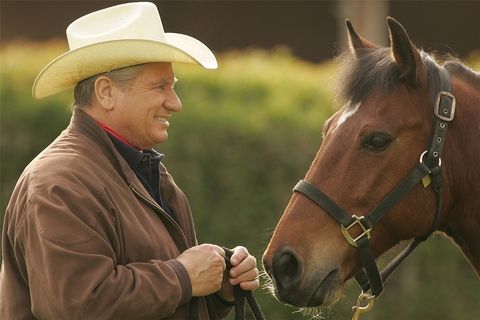
Before there was the “Dog whisperer” on television, there was the Horse whisperer. Monty Roberts was raised in the horse business. He learned that there was one way to train horses - by “breaking” them through domination and force which at times included striking the horse with whips or tying and suspending the horse’s feet and legs. The trainer would impose his will upon the animal until it reached the conclusion that total submission was the only way to survive.

In his early teen years Roberts began to study the behavior and communication patterns of wild mustangs in the badlands of Nevada. He took note of the nonverbal communication among the horses, their body language. He named this kind of horse language "Equus." Drawing on his observation and firsthand experience with horses, Roberts developed a breakthrough training technique that he called “hooking on to” rather than “breaking down” the horse’s will. This new training method was based on a concept he eventually trademarked “Join-Up.”

“Join-Up” not only stopped the “breaking” practice of traditional horse training, but it demonstrated how to cooperate with the horse’s own spirit, ways, and means of communicating as a member of the herd. His techniques laid the platform for a partnership between horse and human rather than a coexistence through domination. The personality and full potential of the horse emerge through a loving freedom and desire rather than domination and infliction. Join-Up relies on invitation rather than imposition.

The Join-Up technique invites an untamed horse that has never been ridden to willingly accept the saddle, bridle, and rider. It is a thing of beauty to watch. Monty Roberts enters a round pen with a wild horse. In as little as half an hour, he’ll be riding the horse. Roberts creates an atmosphere of mutual respect that communicates, “I’m not going to hurt you, and you don’t have to follow me if you don’t want to.”

After a brief period of introducing himself and interacting with the horse comes the moment of truth.
Roberts turns his back to the animal and walks away. At this point the horse trains her eyes on Monty with all-out intensity and attention. She is asking herself, Where is he going? and Do I want to stay by myself? The horse must choose: I want to be with you. I want to join up and follow you on the way. She quickly decides: my safe place is with you. Dropping her head (equine language for “I submit to you”) and trotting to Roberts’ side, the horse says, “I choose to follow. I want to be with you.”

That is the Jesus way. Jesus did not come into this world and command us to submit to Him. He came into this world showing us what true love is all about and inviting us to walk along side Him. The Jesus way is our cooperation with Jesus’ “Follow Me.” This is Jesus’ call to all of us.

What do I want to be when I grow up? I want to follow Jesus, I am working on it, but what does it mean to follow Jesus. The Greek word translated “follow” is most often rooted in the word for “road.” There is an ancient African phrase, “Will you walk with me?” It doesn’t mean a stroll or short jaunt around the corner. It means to enter another person’s world, to join his or her journey. To walk with Jesus does not mean to travel behind or in front of but beside him. To follow Jesus on the way doesn’t mean to fall in behind him in a directional sense but to be caught up in what he is doing. Discipleship is the art of being a pilgrim - the artistry of following Jesus. It is to be caught up in what God is doing in the world today.

Imagine you opened your e-mail in-box and discovered you had received an invitation from some superstar - maybe Phil Mickelson - “Come, be with me, and I will teach you everything I know about golf.” Or maybe you would get a call from someone like Bill Gates who wants you to walk with Him and learn how to become successful in business. For those of you who love to sing, what would your reaction be if you received a phone call from Celine Dion, asking, “Will you come and stay with me for a couple of years? I will teach you to sing like me”? For aspiring writers, how incredible would it be to answer a knock at the door and find Maya Angelou inquiring, “Would you like to hang out with me and learn how to write?”

Jesus Himself is calling you to follow Him and learn how to live. There seems to be a natural progression that Jesus proposed: In John 14:6 Jesus said "I am the way and the truth and the life. No one comes to the Father except through me. To follow Jesus is to be in the right mission (the way: missional living); to follow Jesus is to be in the right relationships (the truth: relational living.)  To follow Jesus is to be in the right future (the life: incarnational living.) Step 1 is belonging, Step 2 is believing, then step 3 is behaving.

 “When Jesus summoned people into the way, he was inviting them to share a purpose or path (the way), a new set of relationships (the truth), and the beauty of community ( the life). If Jesus is the way, the truth, and the life, then His way must be our way, his truth must be our truth, and his life must be our life.” [Leonard Sweet]


“The Jesus way wedded to the Jesus truth brings about the Jesus life.” [Eugene Peterson]


First, we must choose to get on the journey with him—trust him as the “Way.” We realize we want to be with him, to submit to His leadership. The first followers of Jesus were known as those who belonged to “the Way.” They had a way about them. Theirs was not just a shared system of belief that included religious traditions and mystical idiosyncrasies. There were plenty of sects in Jesus’ time like that. But something was different here. These people had a way about how they went about their lives, a way of being that had not been witnessed before. There was something very different about the way these people treated one another, - both insiders and outsiders.

Dictionaries define the word “way” variously—as a habitual manner or characteristic, a method, a direction or vicinity, a passage or path. All of those definitions capture parts of the essence of following Jesus. But followers of Jesus don’t just submit to Jesus’ codes and conduct. They don’t just join him in following a certain path, live in his voice, practice a certain presence from earth to eternity. Most important, the path with Jesus leads to Jesus; the path of life leads to life.

Second, we choose to answer the question, what is truth? This was Pilate’s world-weary question to Jesus, but Pilate was staring in the face of Truth and didn’t know it. Jesus is the Truth, for truth is a Person,not a principle. This relational view of truth contrasts starkly with the world’s way of thinking and demands more than mere intellectual assent. It requires obedience. A follower of the truth is one who follows upon, who trusts and obeys One who is Truth.

Third, we begin to get a life, not a half-life, not term life, but whole life. We learn to re-frame our living based on always pilgriming and always sharing life with Jesus so that “it is no longer I who live, but Christ who lives in me.” A wayfarer of the life is one who follows so closely that his or her life aligns with the life of the Leader. Note that this template is not only sequential but also simultaneous. We are always on the way, we are always learning more and more about the truth, and we are always gaining more and more of that abundant life Jesus talked about in John 10:10. To follow Jesus is a way - a belonging; is a truth - a believing; is a life - a behaving. It is to have a mission, to be in relationship, to live an incarnate, abundant life.

What does it take to be a Courageous Follower of Jesus:

  • The courage to assume responsibility.
  • The courage to be a servant
  • The courage to challenge.
  • The courage to participate in transformation.
  • The courage to take moral action.

Jesus is summoning you:  “Come, follow me. Come, be with me, and I will do more than teach you the way to live your one and only life. I will give you life.”